📚 Every Guide is Researched Before Publishing →
Sukuna and Yorozu
⭐⭐⭐⭐⭐ 4.8/5 • Trusted by 4 Million+ Readers
Related Pages
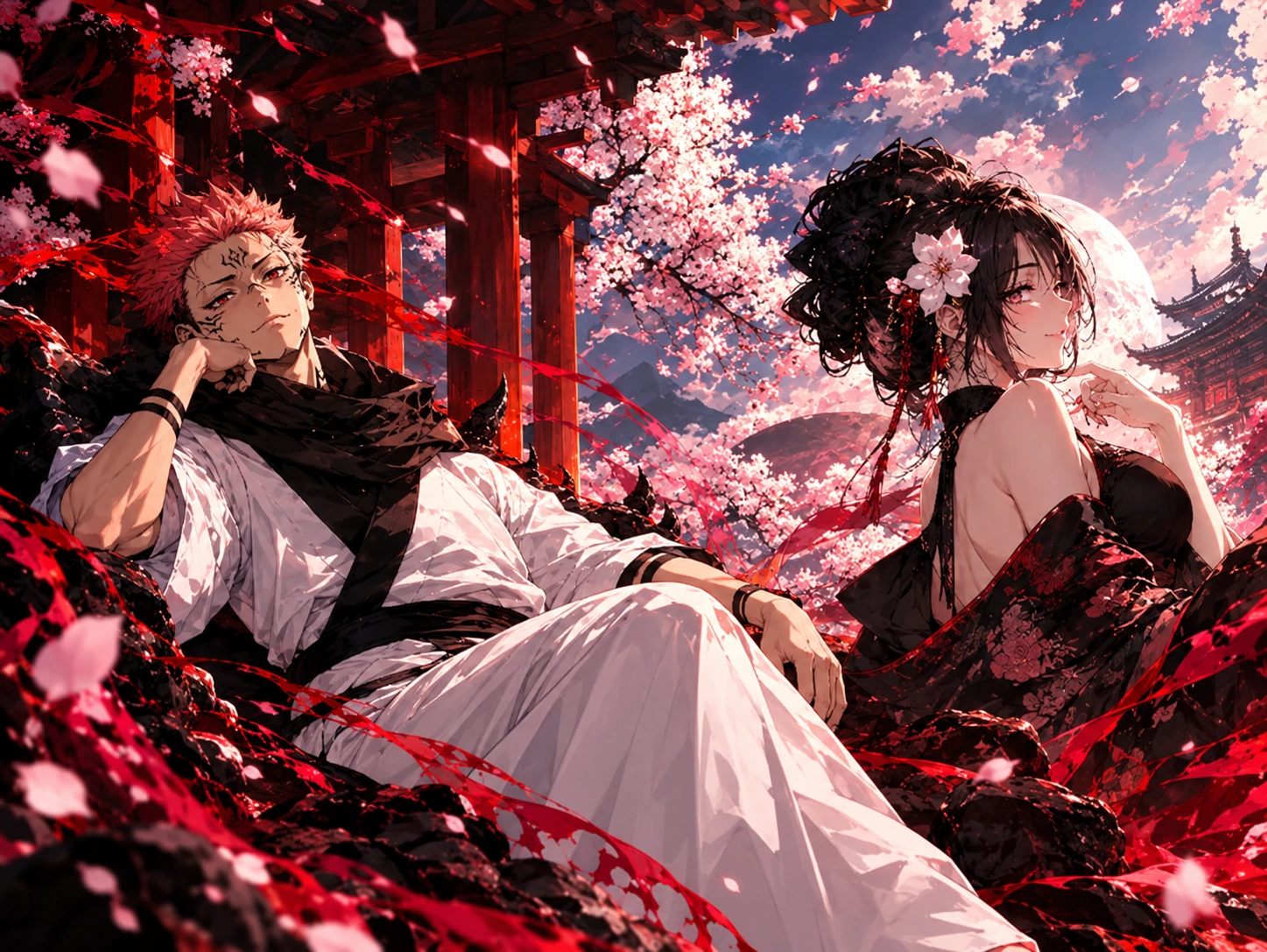
Sukuna and Yorozu have one of the most unusual relationships in Jujutsu Kaisen, built around Yorozu’s extreme obsession with Sukuna and Sukuna’s lack of romantic interest in her. Yorozu was a powerful sorcerer from the Heian era who became deeply fascinated with Sukuna and believed that he was the only person who could truly understand her idea of love. Their connection began in the Heian era, but they meet again during the Culling Game after Yorozu reincarnates in the body of Tsumiki Fushiguro. Yorozu continues to pursue Sukuna and even creates a binding vow connected to her desire to marry him if she defeats him. Sukuna, however, does not return her feelings and mainly treats Yorozu as an opponent he must defeat. Their final battle becomes important because Sukuna uses Megumi’s Ten Shadows Technique, including Mahoraga, while Yorozu fights with her Construction Technique. Before her death, Yorozu also leaves Sukuna a replica of Kamutoke through another binding vow, making their relationship important to Sukuna’s story, Megumi’s suffering, and the events of the final conflict.
Table of Contents
ToggleWho Is Yorozu to Sukuna?
Yorozu is a powerful Heian-era sorcerer who develops an intense and unusual attachment to Sukuna after becoming fascinated by his strength and personality. To Yorozu, Sukuna is not simply another powerful sorcerer but the person she believes can understand her deepest ideas about love and connection. Her feelings become an obsession, while Sukuna does not show the same romantic interest toward her and mainly views her as a strong opponent. Their original connection comes from the Heian era, but Yorozu later returns during the Culling Game after reincarnating in Tsumiki Fushiguro’s body. She continues to pursue Sukuna and wants him to understand her idea of love, even challenging him directly. This makes their relationship strongly one-sided, with Yorozu seeking emotional recognition while Sukuna remains focused on his own goals and defeating her.
Yorozu as a Heian-Era Sorcerer
Yorozu was a powerful sorcerer who lived during the Heian era, the same historical period in which Sukuna was known as an overwhelmingly powerful figure. She possessed the Construction Technique, which allowed her to create matter from cursed energy and gave her many options in combat. Yorozu was highly confident in her own abilities and had an unusual personality that made her stand out from other sorcerers. Her strength and individuality helped explain why she could approach someone as dangerous as Sukuna without simply fearing him. Her connection to Sukuna began during this era and later became important when she reincarnated during the Culling Game.
Yorozu's Obsession With Sukuna
Yorozu becomes deeply obsessed with Sukuna because she believes that his strength and unusual nature make him someone who can truly understand her. Her feelings are much stronger than ordinary admiration because she connects Sukuna with her personal idea of love and believes that being understood by him would give her relationship meaning. She wants Sukuna to recognize her feelings rather than simply defeat or ignore her. This obsession continues even after Yorozu reincarnates many years later. Her actions during the Culling Game show that her main goal is still connected to Sukuna and her desire to receive an emotional response from him.
Why Yorozu Chose Sukuna
Yorozu chooses Sukuna because she sees him as someone powerful enough to stand at her level and possibly understand the unusual way she views love. His overwhelming strength is one of the main things that attracts her, but her interest goes beyond simply wanting to fight a strong opponent. Yorozu believes that Sukuna is different from everyone else and that this difference makes him the person she wants to connect with. She therefore focuses her attention on him instead of seeking an ordinary relationship with another sorcerer. Her desire eventually becomes so strong that she connects her feelings to a marriage vow and challenges Sukuna directly.
Sukuna's View of Yorozu
Sukuna does not appear to share Yorozu’s romantic feelings or view their relationship in the same way she does. Instead, he treats Yorozu primarily as a powerful sorcerer and an opponent who must be defeated. Sukuna recognizes her strength and takes her abilities seriously, especially during their final battle. However, there is little evidence that he wants the emotional relationship Yorozu desires from him. His decision to fight her is driven by his own goals rather than a desire to accept her love. This difference between their feelings is one of the most important parts of their relationship.
Yorozu's View of Sukuna
Yorozu sees Sukuna very differently from how he sees her because she connects him with her personal understanding of love. She believes that Sukuna is the person who can truly understand her and therefore wants his attention and recognition. Her fascination with him is closely connected to his overwhelming strength, confidence, and unusual way of living. Rather than accepting Sukuna’s emotional distance, Yorozu continues trying to force a response from him through her words, actions, and eventual challenge. Her view of Sukuna is therefore highly emotional and idealized compared with Sukuna’s more practical view of her.
Why Their Relationship Is One-Sided
Their relationship is one-sided because Yorozu develops strong romantic and emotional feelings for Sukuna, while Sukuna does not show the same type of attachment toward her. Yorozu wants Sukuna to understand and accept her idea of love, but Sukuna remains focused on his own desires and treats her mainly as an opponent. Even their final battle reflects this difference because Yorozu sees the confrontation as part of her attempt to connect with Sukuna, while Sukuna approaches it as a fight he intends to win. This imbalance makes their relationship tragic and unusual. It also shows how differently the two characters understand love, strength, and emotional connection.
Why Was Yorozu Obsessed With Sukuna?
Yorozu’s obsession with Sukuna comes from the way she connects strength, love, and being truly understood. From the Heian era, she becomes strongly attracted to Sukuna and sees him as someone who is different from everyone else around her. Yorozu believes that a person as powerful and unusual as Sukuna may be capable of understanding her feelings and her unusual idea of love. Because of this belief, she does not treat her attraction as a simple crush but turns it into a major goal in her life. She wants Sukuna’s attention, wants him to recognize her, and wants to prove that she can reach him emotionally. Even after reincarnating during the Culling Game, Yorozu continues pursuing the same goal and eventually challenges Sukuna in an attempt to make him understand her.
Yorozu's Attraction to Sukuna
Yorozu is attracted to Sukuna because of his overwhelming strength and the unusual presence he has among other sorcerers. She sees something special in him that separates him from the people around her and makes him worthy of her attention. Sukuna’s confidence and complete independence also fit the kind of person Yorozu finds fascinating. Her attraction is not based on a normal relationship built through trust or shared experiences. Instead, it begins with her strong fascination with who Sukuna is and what he represents to her. Over time, this fascination becomes much stronger and develops into an intense obsession.
Yorozu's Idea of Love
Yorozu has a very unusual understanding of love, and this idea is one of the main reasons she becomes obsessed with Sukuna. To her, love is connected to strength, possession, understanding, and the desire to make a powerful connection with another person. She believes that truly understanding someone can involve accepting their deepest emotions and desires rather than simply having a normal romantic relationship. Yorozu wants Sukuna to understand this idea and recognize the feelings she has for him. Her unusual view of love makes her relationship with Sukuna very different from an ordinary romance.
Why Yorozu Wanted Sukuna's Attention
Yorozu wants Sukuna’s attention because she believes that his recognition would prove that he understands her. Sukuna is one of the few people she considers strong and unusual enough to matter to her, so his response becomes extremely important to her. She does not simply want to defeat him or prove that she is powerful. She wants him to notice her feelings and acknowledge the connection she believes exists between them. This is why she continues focusing on Sukuna even after their original Heian-era connection ends. Her desire for his attention eventually becomes strong enough to influence her actions during the Culling Game.
Yorozu's Desire to Be Understood
A major part of Yorozu’s obsession is her desire to find someone who can understand the way she thinks and feels. Yorozu is unusual even among powerful sorcerers, and she seems to believe that ordinary people cannot fully understand her idea of love. Sukuna’s overwhelming strength and isolated nature make her believe that he may be different. She therefore sees him as someone who could understand the parts of herself that others cannot. This desire for understanding becomes closely connected to her feelings for him and explains why she wants more than simple recognition.
Why Yorozu Believed Sukuna Could Understand Her
Yorozu believes Sukuna can understand her because she sees him as someone who exists outside normal ideas of strength, relationships, and society. His power and independence make him seem similar to her in the sense that he does not live according to ordinary expectations. Yorozu therefore projects her own ideas onto Sukuna and assumes that he can understand the feelings she wants to express. She believes that someone as powerful as Sukuna should be capable of recognizing the kind of love she describes. However, this belief is mainly Yorozu’s perspective because Sukuna does not show that he shares her emotional understanding.
How Her Obsession Became Extreme
Yorozu’s feelings become extreme because she does not accept Sukuna’s lack of romantic interest as a reason to stop pursuing him. Instead, she continues trying to make him understand her feelings and connects her desire for him with a direct challenge. Her obsession survives even after centuries because she continues pursuing the same goal after reincarnating in the Culling Game. The marriage binding vow also shows how seriously she connects her desire for Sukuna with her idea of love. By the time they fight, her feelings have become so strong that the battle itself becomes part of her attempt to reach and be understood by him.
Sukuna's Attitude Toward Yorozu
Sukuna’s attitude toward Yorozu is very different from the intense feelings Yorozu has for him. Yorozu sees Sukuna as the person who can understand her idea of love, while Sukuna never shows the same romantic attachment toward her. He recognizes Yorozu as a powerful and unusual sorcerer, but his interest is focused more on her strength and what she can demonstrate in battle. Even when Yorozu openly expresses her obsession with him, Sukuna does not respond with affection or treat their relationship as a mutual romance. Instead, he remains emotionally detached and eventually faces her as an opponent. His lack of romantic interest reflects his broader personality, where personal affection has little importance compared with his own desires and goals. Their relationship is therefore largely one-sided, with Yorozu seeking emotional recognition from Sukuna while Sukuna remains focused on his own interests.
Does Sukuna Love Yorozu?
No, Sukuna does not show romantic love toward Yorozu. Yorozu’s feelings are intense and obsessive, but Sukuna never expresses the same emotional attachment toward her. His actions and reactions throughout their story do not establish a mutual romantic relationship. Instead, Sukuna treats Yorozu primarily as a powerful individual and eventually as an opponent. This difference is important because Yorozu’s understanding of their connection is much more emotional than Sukuna’s.
Sukuna's Lack of Romantic Interest
Sukuna shows very little interest in romance, including in his interactions with Yorozu. While Yorozu openly wants Sukuna to understand and respond to her idea of love, Sukuna does not attempt to build a romantic relationship with her. He does not return her emotional devotion or behave as though he shares her attachment. His focus remains on his own desires, strength, and personal objectives. This emotional distance makes Yorozu’s feelings essentially one-sided rather than part of a mutual romance.
Sukuna's View of Yorozu's Strength
Sukuna recognizes that Yorozu is an exceptionally strong sorcerer and takes her abilities seriously as a combatant. Her Construction Technique gives her unusual versatility, allowing her to create different forms of matter for combat. Sukuna’s decision to fight her demonstrates that he considers her powerful enough to be worth confronting. However, recognizing Yorozu’s strength does not mean that Sukuna develops romantic feelings for her. His attention toward her abilities remains separate from the emotional attachment Yorozu has toward him.
Sukuna's Reaction to Yorozu's Obsession
Sukuna does not respond to Yorozu’s obsession with the same intensity. Yorozu openly expresses her desire for Sukuna and wants him to understand her version of love, but Sukuna remains largely detached from those emotions. Rather than encouraging her attachment, he treats the situation according to his own interests. His lack of emotional response becomes especially clear when their relationship leads to a confrontation instead of a romantic connection. Yorozu wants recognition and emotional acceptance from Sukuna, while Sukuna does not provide the response she hopes for.
Why Sukuna Does Not Return Her Feelings
Sukuna does not return Yorozu’s feelings because he does not share her understanding of love or appear interested in forming that kind of relationship. Yorozu views love as something connected to understanding, possession, and giving everything to the person she chooses. Sukuna, however, does not show a need for that emotional connection and remains focused on his own desires. His personality is built around self-interest rather than seeking emotional validation from another person. As a result, Yorozu’s devotion does not create a romantic bond between them.
What Sukuna's Attitude Reveals About Him
Sukuna’s attitude toward Yorozu reveals how emotionally detached he can be from people who develop strong feelings for him. Even someone as devoted as Yorozu cannot make him return emotions that he does not possess. He can recognize her strength and understand the intensity of her obsession without becoming emotionally attached himself. This also shows that Sukuna separates personal feelings from his decisions and is willing to confront someone regardless of their attachment to him. Their relationship ultimately highlights the contrast between Yorozu’s desire for connection and Sukuna’s determination to live according to his own desires.
Yorozu's Binding Vow With Sukuna
Yorozu’s binding vow with Sukuna was created during their battle after Yorozu asked what she would receive if she defeated him. Sukuna answered that she would receive “everything,” and Yorozu turned that answer into a marriage vow, declaring that they would marry if she won. This agreement is an example of how binding vows can create specific conditions between sorcerers. The vow reflected Yorozu’s intense obsession with Sukuna and her belief that defeating him could finally give her the relationship she wanted. Sukuna accepted the condition without showing the same emotional excitement, making the vow different from a mutual romantic commitment. It is also important to keep this marriage vow separate from the later binding vow Yorozu used to recreate Kamutoke before her death.
The Marriage Vow
The marriage vow was made during Sukuna and Yorozu’s battle in the Sendai Colony. Yorozu asked Sukuna what she would receive if she defeated him, and Sukuna answered that she would receive everything. Yorozu then interpreted this as an opportunity to make a marriage agreement with him. The condition was that if Yorozu defeated Sukuna, the two would marry. Yorozu became extremely excited about the idea, showing how seriously she viewed the agreement compared with Sukuna’s detached attitude.
What Yorozu Wanted From Sukuna
Yorozu wanted much more than simply winning a battle against Sukuna. Her main desire was to make Sukuna understand her idea of love and have him recognize the connection she believed existed between them. The marriage vow gave her a way to connect victory with the relationship she wanted. She imagined that defeating Sukuna would allow her to become his wife and finally receive the response she had been seeking. This shows that the vow was closely tied to Yorozu’s obsessive feelings rather than being an ordinary strategic agreement.
The Condition of the Vow
The central condition of the vow was straightforward: if Yorozu defeated Sukuna, they would marry. Yorozu created this agreement after Sukuna told her she would receive everything if she won the fight. Sukuna accepted the condition, although his response did not show the excitement or romantic attachment that Yorozu displayed. The vow therefore connected Yorozu’s desired marriage directly to the outcome of their battle. If she could defeat Sukuna, the agreement would give her the outcome she wanted most.
What Would Happen If Yorozu Won
If Yorozu defeated Sukuna, the condition she established was that they would marry. This was the personal reward Yorozu attached to her victory and the reason she became even more enthusiastic about fighting him. For Yorozu, winning would therefore mean both proving her strength and achieving the relationship she desired. The story does not show Yorozu winning or the marriage taking place because Sukuna defeats her. The vow consequently remains an important part of Yorozu’s motivation rather than becoming an actual marriage.
Why Sukuna Accepted the Vow
Sukuna accepted the marriage condition without displaying the emotional commitment that Yorozu attached to it. At the time, the battle was already a fight to the death, so Yorozu’s condition did not change the basic stakes for Sukuna: losing meant being killed. His response to her marriage proposal is notably detached compared with Yorozu’s excitement. The manga does not present Sukuna as accepting the vow because he secretly loved Yorozu. Instead, his attitude remains consistent with his lack of romantic interest in her.
Why the Vow Matters
The marriage vow matters because it clearly demonstrates the difference between Yorozu’s feelings and Sukuna’s attitude toward her. Yorozu connects the battle to love, marriage, and her desire to be understood by Sukuna, while Sukuna remains focused on the fight itself. It also makes the outcome personally meaningful for Yorozu because victory would have fulfilled her desired relationship. Most importantly, this vow should be kept separate from the later Kamutoke-related vow, in which Yorozu used her Construction Technique to recreate Sukuna’s Heian-era cursed tool as a final gift.
Yorozu and Tsumiki Fushiguro
Yorozu’s connection to Tsumiki begins when Yorozu reincarnates in the body of Tsumiki Fushiguro during the Culling Game. This makes Tsumiki’s body the physical vessel through which Yorozu returns, while Yorozu remains a separate person with her own memories, personality, and obsession with Sukuna. Tsumiki is especially important because she is Megumi’s older stepsister and one of the people he cares about most. Sukuna understands Megumi’s attachment to Tsumiki and later uses the situation to break down Megumi’s emotional resistance. This creates a tragic connection between Yorozu, Tsumiki, Megumi, and Sukuna without making their relationships the same. Yorozu wants Sukuna’s attention, while Tsumiki’s existence is tied to Megumi’s deepest emotional concerns. The situation becomes even more tragic because Sukuna’s actions against Yorozu ultimately cause devastating consequences for Megumi and his sister. This is one of the key points where Yorozu’s story directly intersects with Sukuna’s larger plan involving Megumi, which is explored further in the Sukuna and Megumi relationship.
Yorozu's Reincarnation and the Culling Game
Yorozu returns during the Culling Game after reincarnating in the body of Tsumiki Fushiguro, one of the modern participants chosen as a vessel for an ancient sorcerer. Although she uses Tsumiki’s body, Yorozu remains herself, retaining her personality, memories, and strong attachment to Sukuna. Her Construction Technique allows her to create matter from cursed energy, making her a highly versatile fighter with abilities such as liquid metal and Insect Armor. After awakening, Yorozu’s main goal is to find Sukuna and confront him because she believes their connection is tied to her understanding of love. The Culling Game creates the opportunity for this meeting because both ancient sorcerers are brought back into the modern era through reincarnation. Once Sukuna takes control of Megumi’s body, the connection between Yorozu and Sukuna becomes directly linked to the Fushiguro family. Their eventual confrontation becomes one of the Culling Game’s most important encounters for the story’s emotional and strategic consequences.
Why Did Yorozu Challenge Sukuna?
Yorozu challenged Sukuna because she wanted him to understand her idea of love and give her the emotional response she had always desired. For Yorozu, fighting Sukuna was not simply about proving who was stronger, but about creating a situation where he could finally recognize her feelings. She wanted her strength and devotion to force Sukuna to acknowledge her, which made the confrontation deeply personal for her. This is why she was willing to use her strongest abilities, including Insect Armor and Perfect Sphere, rather than holding anything back. Sukuna accepted the battle because he was willing to confront Yorozu and had his own reasons for fighting her, without sharing her romantic motivation. Yorozu ultimately hoped that defeating Sukuna would lead to the relationship she wanted, which was reflected in her marriage binding vow. Her challenge therefore represents a one-sided emotional pursuit, while Sukuna approaches the encounter without returning those feelings.
Sukuna vs Yorozu
Sukuna vs Yorozu is important to their relationship because Yorozu enters the fight with strong personal and romantic feelings, while Sukuna approaches it without returning her emotions. Yorozu uses her Construction Technique creatively, including liquid metal, Insect Armor, and Perfect Sphere, to challenge Sukuna at her full strength. Sukuna chooses to fight primarily through Megumi’s Ten Shadows Technique rather than relying only on his own Shrine abilities. His approach allows him to use different shikigami while also testing Mahoraga’s adaptation against Yorozu’s techniques. Mahoraga becomes especially important because Sukuna is interested in understanding how its adaptation works and using that knowledge for his own purposes. The battle therefore serves both as Yorozu’s attempt to gain Sukuna’s recognition and as an opportunity for Sukuna to make use of Megumi’s technique. Sukuna ultimately defeats Yorozu, ending her attempt to turn their connection into the relationship she wanted. For the complete battle breakdown, see Sukuna vs Yorozu.
Sukuna Uses Megumi's Ten Shadows Against Yorozu
Sukuna uses Megumi’s Ten Shadows Technique against Yorozu because he wants to defeat her while also making full use of the abilities he gained through Megumi’s body. Rather than relying only on his Shrine, Sukuna uses Ten Shadows to summon shikigami and create different options during the battle. He uses the technique with a level of control and understanding that reflects his own combat experience, adapting Megumi’s abilities to his personal fighting style. The shikigami give Sukuna additional ways to pressure Yorozu and respond to her Construction Technique. Most importantly, Sukuna uses Mahoraga because its adaptation ability is valuable against Yorozu’s strongest techniques, including Perfect Sphere. This allows Sukuna to turn Megumi’s inherited technique into a strategic tool rather than simply copying the way Megumi normally fights. The battle is also significant for Megumi because Sukuna is using his body and one of his most important abilities against Yorozu, who is connected to Tsumiki. Sukuna’s use of Ten Shadows therefore makes the confrontation important not only for Yorozu and Sukuna but also for Megumi’s story. This battle also demonstrates why Mahoraga became so valuable to Sukuna, which is explored in more detail in Sukuna vs Mahoraga.
Yorozu's Cursed Technique
Yorozu’s Cursed Technique, Construction, allowed her to create matter from cursed energy, making her fighting style extremely versatile and difficult to predict. She could shape materials into weapons and defensive tools that gave her different ways to attack Sukuna. Her ability to create liquid metal gave her greater control over the battlefield and allowed her to pressure Sukuna from different angles. Yorozu could also transform her body with Insect Armor, increasing her speed, strength, and combat ability during the fight. Her strongest creation was Perfect Sphere, an extremely dangerous technique that created a sphere with theoretically infinite pressure at its surface. These abilities meant Sukuna could not simply overpower Yorozu through a straightforward exchange of attacks. Because of her creativity, powerful creations, and Perfect Sphere, Yorozu’s Construction Technique made her a serious opponent who required Sukuna to use a careful strategy involving Ten Shadows and Mahoraga.
Yorozu's Perfect Sphere vs Sukuna
Yorozu’s Perfect Sphere was one of the most dangerous techniques Sukuna faced because its surface was designed to create theoretically infinite pressure at the point of contact. Yorozu planned to use this technique with her Domain Expansion, making it extremely difficult for an opponent to avoid once activated. The threat forced Sukuna to find a specific counter rather than simply overpowering the attack with brute strength. Sukuna responded by relying on Megumi’s Ten Shadows Technique, especially its ability to summon Mahoraga. Mahoraga’s adaptation allowed Sukuna to develop a way to deal with Yorozu’s Perfect Sphere without directly matching its overwhelming properties. This made Mahoraga a crucial part of Sukuna’s strategy during this technical exchange. The clash showed why Yorozu’s strongest creation was such a serious threat and why Sukuna needed careful planning to overcome it.
Sukuna's Strategy Against Yorozu
Sukuna approached his fight with Yorozu as a strategic battle rather than relying only on his own Shrine techniques. He used Megumi’s Ten Shadows Technique to create different options for dealing with Yorozu’s Construction Technique and her strongest creations. A major part of his plan involved using Mahoraga’s adaptation to understand and counter the threat posed by Perfect Sphere. Sukuna also controlled the pace of the battle, forcing Yorozu to respond to his summons and changing tactics instead of allowing her to dictate every exchange. His ability to combine powerful techniques with careful planning shows why his battle intelligence is one of the most important parts of his strength. By the end of the fight, Sukuna had chosen the approach that gave him the safest and most effective path to defeating Yorozu.
Why Sukuna Does Not Rely Only on Shrine
Sukuna did not need to depend entirely on Shrine when fighting Yorozu because he had another powerful option available through Megumi’s body. Instead, he chose to use Ten Shadows and its shikigami to approach the battle differently. Yorozu’s Construction Technique gave her several ways to attack and defend, so using only direct slashing attacks was not the only option Sukuna had. Ten Shadows allowed him to create additional pressure and use different abilities during the fight. This gave Sukuna more flexibility while keeping his own strongest techniques available when necessary.
Using Ten Shadows as a Counter
Sukuna used Ten Shadows as a counter because the technique gave him access to shikigami with different abilities. Rather than trying to defeat every one of Yorozu’s creations through direct force, he could use the technique to create situations that worked against her fighting style. The most important advantage was the possibility of using Mahoraga, whose adaptation could respond to unusual techniques and attacks. This made Ten Shadows particularly valuable against Yorozu’s powerful Construction Technique. Sukuna turned Megumi’s inherited technique into a tool for solving the specific problems Yorozu created.
Testing Mahoraga's Adaptation
Mahoraga’s adaptation was central to Sukuna’s strategy because Sukuna understood that its ability could provide an answer to techniques that were difficult to overcome normally. During the fight, he used Mahoraga to adapt to Yorozu’s Perfect Sphere, allowing the shikigami to develop a response to its dangerous properties. Sukuna was therefore not simply summoning Mahoraga for additional strength. He was using its adaptation as part of a deliberate method for dealing with Yorozu’s strongest attack. This demonstrated Sukuna’s ability to use a shikigami’s unique characteristics for a specific tactical purpose.
Managing Yorozu's Construction Technique
Yorozu’s Construction Technique was dangerous because she could create different forms of matter and change how she fought depending on the situation. Sukuna therefore had to account for her liquid metal, Insect Armor, and Perfect Sphere rather than treating her as a straightforward close-range opponent. Ten Shadows gave him additional ways to respond while allowing him to keep pressure on Yorozu. He also avoided allowing her strongest creations to completely control the battle. By managing the different threats created by Construction, Sukuna gradually reduced Yorozu’s opportunities to turn the fight in her favor.
Controlling the Pace of the Fight
Sukuna maintained control by deciding when and how to use his available techniques instead of simply reacting to Yorozu’s attacks. His use of Ten Shadows changed the rhythm of the battle and forced Yorozu to deal with shikigami and their abilities. This prevented her from freely building momentum with Construction and gave Sukuna more time to develop his strategy. His ability to remain composed while facing Yorozu’s strongest techniques was another important advantage. Sukuna’s control over the pace showed that he was thinking several steps ahead rather than fighting through instinct alone.
Sukuna's Final Decision
Sukuna’s final decision was to continue using Ten Shadows as the key method for overcoming Yorozu’s strongest threat. Instead of abandoning the technique when the battle became dangerous, he relied on Mahoraga’s adaptation to deal with Perfect Sphere. Once he had the necessary counter, Yorozu’s most powerful option no longer gave her the same advantage. Sukuna could then finish the fight without needing to reveal everything he was capable of through Shrine. His final approach reflects his willingness to choose the most effective strategy for a specific opponent rather than simply using his most destructive ability.
The Kamutoke Connection
Kamutoke is connected to Yorozu’s final actions toward Sukuna, but it is important to separate this from the marriage vow she proposed earlier. Yorozu created a replica of Kamutoke through her Construction Technique and left it as a final gift for Sukuna. This gift was connected to a separate binding vow involving the replica, not the marriage agreement. Yorozu’s reason for creating Kamutoke was tied to her desire to give Sukuna something meaningful even though he did not return her feelings. The weapon also became relevant to Sukuna because it was a powerful cursed tool associated with his fighting style. Understanding these two vows separately prevents confusion about Yorozu’s relationship with Sukuna and what she actually promised him. The marriage vow was about what Yorozu wanted from Sukuna, while the Kamutoke-related vow concerned the creation and use of the cursed tool.
Why Yorozu Wanted to Marry Sukuna
Yorozu wanted to marry Sukuna because she believed that love meant finding someone strong enough to understand and accept her completely. From her perspective, Sukuna was the only person who could truly match her strength and understand the feelings she struggled to express. She connected marriage to her desire to become closer to him and receive the emotional response she wanted. Her challenge against Sukuna was therefore tied directly to this desire, as she believed defeating him could lead to the relationship she imagined. However, Sukuna never showed the same romantic feelings toward Yorozu and remained emotionally detached from her proposal. This made her desire for marriage largely one-sided rather than a mutual relationship. The tragedy of the proposal comes from the fact that Yorozu saw it as an expression of love, while Sukuna treated the situation very differently.
Did Sukuna Care About Yorozu?
Sukuna did not appear to care about Yorozu in a romantic or emotionally attached way, but he did recognize her as a powerful and capable sorcerer. His interest in her was mainly connected to her strength, her unusual Construction Technique, and the challenge she presented in battle. When Yorozu challenged him, Sukuna accepted because he had no reason to fear the fight and could use the opportunity to test his strategy with Megumi’s Ten Shadows Technique. Yorozu also became important to Sukuna because her reincarnation in Tsumiki’s body connected the fight to Megumi and his emotional attachment to his sister. However, Sukuna ultimately treated Yorozu as an opponent rather than someone he wanted to protect or love. His willingness to defeat her despite her feelings shows how emotionally detached he remained throughout their relationship. Overall, Sukuna’s actions suggest that he valued Yorozu mainly for her strength, circumstances, and usefulness to his own goals rather than for any personal affection.
Sukuna and Yorozu Compared With Sukuna and Megumi
Sukuna’s relationship with Yorozu is completely different from his relationship with Megumi because Yorozu’s connection is based on intense obsession, while Sukuna’s interest in Megumi is primarily strategic. Yorozu openly wanted Sukuna’s love and believed that marriage could give their relationship the meaning she desired. Megumi, however, resisted Sukuna and never willingly accepted the role Sukuna wanted him to play. Sukuna showed little interest in returning Yorozu’s romantic feelings, but he deliberately targeted Megumi because of the potential of his Ten Shadows Technique and the abilities it could provide. This made Sukuna’s relationship with Megumi far more calculated and focused on control and usefulness. Yorozu approached Sukuna through emotional devotion, while Megumi fought against Sukuna’s influence whenever he could. Their completely different relationships are explored further in the Sukuna and Megumi relationship.
Sukuna and Yorozu Compared With Sukuna and Yuji
Sukuna’s relationship with Yuji is very different from his connection with Yorozu, even though both relationships involve strong and unusual reactions toward Sukuna. Yuji became Sukuna’s vessel and constantly resisted his control, refusing to accept Sukuna’s presence or goals. Yorozu, on the other hand, admired Sukuna intensely and wanted to be accepted by him, even connecting her feelings to marriage. Sukuna treated Yuji with hostility and viewed him as an obstacle, while he treated Yorozu mainly as a powerful opponent rather than a romantic interest. Yuji’s resistance made their relationship a struggle for control, whereas Yorozu’s devotion made hers largely one-sided. Neither relationship was normal because Sukuna did not form a healthy emotional bond with either person. The key difference is that Yuji opposed Sukuna directly, while Yorozu actively sought his attention and affection. This contrast is explored further in the Sukuna and Yuji relationship.
Yorozu's Final Moments
Yorozu’s final moments came after Sukuna defeated her using Megumi’s Ten Shadows Technique and Mahoraga’s adaptation. Despite knowing that Sukuna did not share her romantic feelings, Yorozu remained focused on the connection she believed existed between them. Before her death, she left Sukuna a final gift in the form of a replica of Kamutoke, created through her Construction Technique. Sukuna showed little emotional reaction to Yorozu’s feelings or her final gesture, treating her death as the outcome of their battle. However, Yorozu’s death had consequences beyond her own story because she had been reincarnated through Tsumiki Fushiguro’s body. Tsumiki’s death devastated Megumi, who had already been placed in an extremely vulnerable position by Sukuna. This made Yorozu’s defeat especially tragic because her obsession with Sukuna ultimately became part of the chain of events that destroyed Tsumiki’s life and deeply affected Megumi.
How Yorozu Affected Sukuna's Story
Yorozu played an important role in Sukuna’s story because her connection to Tsumiki brought together several major events surrounding Sukuna and Megumi. Her battle with Sukuna gave him an opportunity to use Megumi’s Ten Shadows Technique, particularly Mahoraga, as part of his strategy. The fight also resulted in Yorozu leaving behind a replica of Kamutoke, adding another connection between her and Sukuna. More importantly, Yorozu’s death meant the death of Tsumiki, whose body she had taken during the Culling Game. Tsumiki’s death became a devastating emotional blow for Megumi and contributed to his loss of hope and resistance against Sukuna. This emotional collapse made it easier for Sukuna to maintain control over Megumi’s body. Yorozu therefore affected Sukuna’s story not because of a romantic relationship, but because her actions became connected to Sukuna’s plans, Megumi’s suffering, and the later conflict.
What Makes Sukuna and Yorozu's Relationship Unique?
Sukuna and Yorozu’s relationship is unique because it combines one-sided obsession, an ancient connection, a binding vow, and a tragic ending. Yorozu developed intense feelings for Sukuna and believed that he was the only person who could truly understand her idea of love. Their connection began in the Heian era, giving their relationship a history that existed long before their reincarnation in the modern era. Yorozu even connected her desire for Sukuna to a marriage binding vow, showing how seriously she viewed their relationship. Her reincarnation through Tsumiki’s body later connected her directly to Megumi, whose body Sukuna had taken for his own purposes. Despite Yorozu’s devotion, Sukuna remained emotionally detached and never showed the same romantic attachment toward her. Instead of becoming a relationship based on mutual affection, their connection eventually led them into a deadly battle. This combination of obsession, manipulation, sacrifice, and emotional detachment makes their relationship one of the strangest connections in Sukuna’s story.
Sukuna and Yorozu Relationship Timeline
Sukuna and Yorozu’s relationship began in the Heian era, when Yorozu first encountered Sukuna and became intensely fascinated by him. Her admiration developed into an obsession, and she eventually connected her feelings to a marriage binding vow involving Sukuna. Centuries later, Yorozu was reincarnated during the Culling Game and took control of Tsumiki Fushiguro’s body. Around the same period, Sukuna took over Megumi’s body, creating a tragic connection between the two reincarnated sorcerers through the Fushiguro siblings. Yorozu then sought out Sukuna and challenged him to a fight, hoping to make him understand her feelings and respond to her idea of love. Sukuna used Megumi’s Ten Shadows Technique and Mahoraga’s adaptation to overcome her strongest abilities. Before dying, Yorozu left Sukuna a replica of Kamutoke as her final gift. Sukuna ultimately defeated Yorozu, ending their unusual and largely one-sided relationship in battle.
Biggest Sukuna and Yorozu Moments
One of the biggest moments in Sukuna and Yorozu’s story is their first meeting in the Heian era, when Yorozu became fascinated by Sukuna. Her feelings eventually became an intense obsession, leading her to openly declare her desire for him and connect it to a marriage binding vow. Centuries later, Yorozu returned through Tsumiki Fushiguro’s body, while Sukuna took control of Megumi’s body. Yorozu then confronted Sukuna and challenged him to a battle that was deeply personal to her. Sukuna responded by using Megumi’s Ten Shadows Technique rather than relying only on his own abilities. As the fight progressed, he summoned Mahoraga, whose adaptation became crucial against Yorozu’s strongest techniques. Yorozu ultimately created and left behind a replica of Kamutoke as her final gift to Sukuna. Despite everything she had done to gain his attention and affection, Sukuna remained emotionally detached from her. He eventually defeated Yorozu, bringing her story and her one-sided connection with Sukuna to a tragic end.
Sukuna and Yorozu Relationship Facts
Yorozu was an ancient sorcerer who became intensely obsessed with Sukuna and viewed him as the person who could understand her idea of love. She genuinely loved Sukuna from her own perspective, but Sukuna did not return those romantic feelings or view her as a romantic partner. Yorozu wanted to marry Sukuna because she believed marriage would allow her to form the deep connection she desired with him. Her marriage binding vow was connected to a condition in which she would marry Sukuna if she defeated him, and this was separate from the later binding vow connected to Kamutoke. Sukuna accepted her challenge but did not accept or return her love, treating the situation primarily as a confrontation with a powerful opponent. Yorozu used Tsumiki Fushiguro’s body after reincarnation during the Culling Game, while retaining Yorozu’s own identity and personality. Before her death, she created a replica of Kamutoke and left it for Sukuna as her final gift. Sukuna used Ten Shadows against Yorozu because Megumi’s technique, especially Mahoraga’s adaptation, gave him an effective way to counter her strongest abilities. Yorozu was ultimately defeated and died after Sukuna overcame her using his chosen strategy. Her death also caused Tsumiki’s death and became a major emotional blow to Megumi, further connecting Yorozu’s story to Sukuna’s plans. Yorozu understood that challenging Sukuna was extremely dangerous, but the story does not clearly establish that she knew in advance that Sukuna would definitely kill her. Overall, their relationship was defined by Yorozu’s intense devotion and Sukuna’s emotional detachment rather than mutual romantic love.
Sukuna and Yorozu Explained
Sukuna and Yorozu’s relationship is best understood as a largely one-sided connection shaped by obsession, strength, and tragedy. Their story began in the Heian era, when Yorozu became deeply fascinated with Sukuna and developed strong feelings toward him. She later connected those feelings to a marriage binding vow, hoping that defeating Sukuna would allow her to become closer to him. After reincarnating through Tsumiki during the Culling Game, Yorozu eventually confronted Sukuna, who had taken Megumi’s body. Their battle brought together Yorozu’s strongest abilities, Sukuna’s use of Ten Shadows, and Mahoraga’s adaptation. Yorozu’s final gift of a Kamutoke replica and her death ultimately showed that her feelings for Sukuna were never returned in the same way.
Their Heian-Era Connection
Yorozu and Sukuna first crossed paths during the Heian era, when Sukuna was feared as one of the strongest sorcerers of his time. Yorozu was immediately fascinated by him and became deeply interested in his strength and presence. Her feelings developed into an obsession that went far beyond simple admiration. Sukuna, however, did not show the same emotional attachment toward Yorozu. Their Heian-era connection therefore established the basic dynamic that continued after their reincarnation: Yorozu wanted a deeper relationship, while Sukuna remained detached.
Yorozu's Obsession
Although Sukuna controls Megumi’s body, Megumi’s consciousness continues to exist and can resist him from within. This resistance is not the same as physically taking control of the body, because Megumi cannot simply override Sukuna whenever he wants. His ability to fight back depends heavily on his mental and emotional condition. The events surrounding Tsumiki cause Megumi to fall into deep despair, making his internal resistance much weaker. Even so, his continued existence means that Sukuna has not completely erased Megumi’s identity. Megumi’s mental resistance becomes particularly important when others attempt to reach him and restore his will to fight.
Yorozu's Obsession
Yorozu’s feelings for Sukuna were intense and obsessive rather than a normal romantic attraction. She believed that Sukuna was uniquely capable of understanding her and wanted him to acknowledge her feelings. This belief influenced many of her actions, including her decision to challenge him and her desire to marry him. Even when Sukuna did not respond romantically, Yorozu continued to pursue the connection she imagined between them. Her obsession ultimately became one of the main reasons their relationship ended in a deadly confrontation.
Sukuna's Lack of Romantic Interest
Sukuna never showed the same romantic interest in Yorozu that she showed toward him. He recognized that Yorozu was a powerful sorcerer and took her abilities seriously, but this was different from having emotional or romantic feelings for her. His decision to fight her was not motivated by a desire to develop their relationship. Instead, Sukuna approached her as an opponent and focused on defeating her. This emotional distance is important because it shows that their relationship was never a mutual romance.
The Marriage Binding Vow
Yorozu connected her desire for Sukuna to a marriage binding vow during their confrontation. The basic condition was tied to Yorozu defeating Sukuna, with marriage representing what she wanted from him if she succeeded. The vow reflected how strongly she associated love with strength, acceptance, and commitment. Sukuna accepted the challenge without demonstrating that he shared her romantic intentions. It is also important not to confuse this marriage vow with the separate binding vow associated with the Kamutoke replica.
Tsumiki and the Culling Game
During the Culling Game, Yorozu was reincarnated and took control of Tsumiki Fushiguro’s body. Yorozu remained herself rather than becoming Tsumiki, which allowed her own personality, memories, and goals to continue. This created a major connection between Yorozu’s story and Megumi because Tsumiki was his older stepsister. At the same time, Sukuna had taken control of Megumi’s body for his own purposes. As a result, Yorozu and Sukuna’s conflict became directly connected to the Fushiguro siblings.
Sukuna vs Yorozu
Sukuna and Yorozu eventually fought after Yorozu sought him out and challenged him. Yorozu used her Construction Technique, including powerful creations such as Insect Armor and Perfect Sphere, to challenge Sukuna. Sukuna responded by using Megumi’s Ten Shadows Technique instead of relying only on Shrine. Mahoraga’s adaptation became especially important in dealing with Yorozu’s strongest technique. Sukuna ultimately defeated Yorozu, ending the relationship she had spent so much of her life trying to define.
Kamutoke and Her Final Gift
Before her death, Yorozu created a replica of Kamutoke using her Construction Technique and left it for Sukuna. The gift represented another expression of her desire to give something meaningful to the person she was obsessed with. However, this Kamutoke-related event should be understood separately from the marriage binding vow. The two were not the same agreement and served different purposes in the story. Yorozu’s final gift therefore became a lasting reminder of how far she went to express her feelings toward Sukuna.
The Real Meaning of Their Relationship
The real meaning of Sukuna and Yorozu’s relationship lies in the contrast between Yorozu’s emotional obsession and Sukuna’s detachment. Yorozu wanted Sukuna to understand and accept her idea of love, while Sukuna primarily saw her as a strong opponent and part of the circumstances surrounding Megumi and Tsumiki. Her marriage proposal, challenge, and final gift all came from her desire for a connection that Sukuna never returned. Their relationship ultimately ended with Sukuna defeating Yorozu rather than accepting her feelings. This makes their story less about mutual romance and more about obsession, strength, and the tragic consequences of Yorozu’s devotion.
Sukuna and Megumi’s relationship begins when Sukuna recognizes Megumi as a sorcerer with unusual potential, especially because of his Ten Shadows Technique. As Sukuna learns more about the technique, his interest in Megumi grows because Ten Shadows offers powerful shikigami and the possibility of summoning Mahoraga. Sukuna eventually develops a long-term plan to take advantage of Megumi’s body and abilities when the right opportunity appears. After taking possession of Megumi, Sukuna gains access to Ten Shadows and uses it as part of his own combat strategy. Megumi’s consciousness remains inside the body and continues to resist Sukuna, although his emotional condition makes that resistance increasingly difficult. Their conflict eventually becomes connected to the final battle against Sukuna, where Yuji and the others try to separate him from Megumi. Ultimately, Sukuna’s defeat allows Megumi to regain control of his body, bringing their long and tragic connection to an end.
Final Takeaway
Yorozu’s relationship with Sukuna is mostly a one-sided obsession, with Yorozu seeing him as the person who could understand and complete her idea of love. She wanted Sukuna to recognize her feelings and went as far as connecting her desire to marry him with a binding vow. Sukuna, however, never returned those romantic feelings and remained emotionally detached from her. His interest in Yorozu was mainly connected to her strength, the situation involving Tsumiki, and the opportunity to use the battle to his own advantage. The marriage vow showed how seriously Yorozu viewed her connection with Sukuna, while their final fight showed how far she was willing to go for him. Her creation of a Kamutoke replica was another final expression of her devotion, but Sukuna did not respond with the same emotional attachment. Their story ultimately shows the difference between Yorozu’s intense desire for connection and Sukuna’s cold, strategic nature. For more information about Sukuna’s character, abilities, and relationships, explore the Sukuna homepage.
Frequently Asked Questions
Who is Yorozu to Sukuna?
Yorozu was an ancient sorcerer who became deeply obsessed with Sukuna. She developed strong romantic feelings for him and wanted him to understand her idea of love. Sukuna recognized Yorozu as a powerful opponent but did not share her romantic attachment.
Does Yorozu love Sukuna?
Yes. Yorozu had intense romantic feelings for Sukuna and believed he was the person who could understand her completely. Her obsession influenced her desire to marry him, challenge him, and ultimately leave him a final gift.
Does Sukuna love Yorozu?
No. Sukuna does not show romantic love toward Yorozu. He acknowledges her strength and treats her as a serious opponent, but his actions show emotional detachment rather than mutual affection.
Why did Yorozu want to marry Sukuna?
Yorozu believed that marriage would allow her to form the deep connection with Sukuna that she desired. She viewed Sukuna as someone strong enough to understand her idea of love and wanted his acceptance. Her desire for marriage was therefore part of her intense obsession with him.
What was Yorozu's binding vow with Sukuna?
Yorozu connected a marriage condition to her challenge against Sukuna. If she defeated him, she wanted the outcome to be marriage with Sukuna. This reflected her personal feelings toward him and should be distinguished from the separate binding vow connected to Kamutoke.
Why did Sukuna fight Yorozu?
Sukuna fought Yorozu because she challenged him and was a powerful opponent with dangerous abilities. He also used the battle as an opportunity to use Megumi’s Ten Shadows Technique and Mahoraga’s adaptation. His reason for fighting was not romantic interest in Yorozu.
Was Yorozu using Tsumiki's body?
Yes. Yorozu was reincarnated through Tsumiki Fushiguro’s body during the Culling Game. Yorozu remained her own person, with her own personality and memories, while using Tsumiki’s body as her vessel.
Why did Sukuna use Megumi's Ten Shadows against Yorozu?
Sukuna used Ten Shadows because it gave him powerful tactical options against Yorozu’s Construction Technique. Most importantly, Mahoraga’s adaptation provided a way to counter Yorozu’s strongest ability, Perfect Sphere. This allowed Sukuna to defeat her without relying only on Shrine.
What did Yorozu give Sukuna?
Yorozu left Sukuna a replica of Kamutoke created through her Construction Technique. She gave it to him as a final gesture connected to her feelings toward him before her death.
What is Kamutoke?
Kamutoke is a powerful cursed tool associated with Sukuna. Yorozu created a replica of the weapon through her Construction Technique and left it for Sukuna as her final gift.
Did Sukuna care about Yorozu?
Sukuna recognized Yorozu’s strength and treated her as a serious opponent, but he did not show the same emotional attachment she had toward him. His actions suggest that his interest was based more on her abilities and the circumstances surrounding the battle than personal affection.
What happened to Yorozu?
Yorozu was defeated by Sukuna during their battle. Sukuna used Megumi’s Ten Shadows Technique and Mahoraga’s adaptation to overcome her strongest abilities. Yorozu died after the battle, ending her one-sided connection with Sukuna.
How did Yorozu affect Megumi?
Yorozu affected Megumi because she was using Tsumiki’s body when Sukuna fought her. Her defeat resulted in Tsumiki’s death, which became a devastating emotional blow for Megumi. This contributed to the circumstances that allowed Sukuna to maintain greater control over Megumi.
What is the difference between Yorozu's marriage vow and her Kamutoke vow?
The marriage vow and the Kamutoke-related vow are separate events. The marriage vow was connected to Yorozu’s desire to marry Sukuna if she defeated him. The Kamutoke-related vow concerned the creation and circumstances surrounding the replica of Kamutoke. They should not be treated as one binding vow.
Why is Sukuna and Yorozu's relationship important?
Their relationship is important because it reveals the contrast between Yorozu’s intense obsession and Sukuna’s emotional detachment. It also connects several major events involving Tsumiki, Megumi, Ten Shadows, Mahoraga, and Kamutoke. Their story ultimately shows how Yorozu’s desire for Sukuna led to a tragic confrontation rather than a mutual romantic relationship.
⭐⭐⭐⭐⭐ 4.8/5 • Trusted by 4 Million+ Readers
Ryomen Sukuna - 4k Wallpapers
Ryomen Sukuna is one of the strongest and most famous characters in Jujutsu Kaisen. He is known as the King of Curses because of his incredible power, terrifying abilities, and fearsome reputation.